How Do We Use Appropriate Language When Describing Mental Illness
Near Miss was deemed the least appropriate median1. Learning a new language pushes you to expose yourself to new.

If We Begin To Identify What We Want To Have Happen Using Language That Describes The Soluti Solution Focused Therapy Therapy Counseling Counseling Techniques
Some may refer to themselves as living.
. He was mentally ill. They may know someone who is sick or feeling very sad. Everyone involved in mental health services needs to think carefully about the language and terminology they use to describe people who have a mental illness or are experiencing mental health issues.
It divides people into two camps. IQR1-2 phrase by participants. The messages you give need to be clear positive and show that you see that person as an individual.
When it comes to mental health and mental illness language can be a very tricky landscape to navigate. Words such as psycho mental or crazy are inappropriate and destructive because they often cause shame and humiliation for a person with mental illness. They used to call it a nervous breakdown.
27 September 2017 101 PM EDT. These words can also create fear or stereotyped views reinforce stigma influence whether someone will seek treatment or not and whether or. Use age-appropriate language when discussing any topic with your child advises Jean-Paul Boudreau professor of psychology and director of the Children Health Infancy Learning Development CHILD lab at Ryerson University in Toronto.
Labelling someone with a mental illness as different is essentially saying. Deaf Use deaf and hard of hearing community. How do words affect the mind.
The sane and the insane. Using a person-centered approach for example someone should. 5 for example person with a substance use disorder has a neutral tone and distinguishes the.
When speaking with someone living with a mental health condition the language you use must be respectful and accepting. Participants stated that they perceived the phrase to be accurate clear neutral to the point and reflected intention and seriousness of the behaviour. We tend to use these words more when describing a mass murderer or with a violent act that has been connected to mental illness in the media.
We dont go about our days intending to upset or offend anyone its just that as. Terms such as psycho crazy and junkie should not be used. Respect and dignity through the use of language do I have a problem or an illness asks Veryan Richards.
When you think of the word mental health what concepts ideas usually come to your mind. Victim suffering from or affected with a mental illness. Mental illness is a general condition.
A person is living with or has a diagnosis of mental illness. Use language that is easy to understand. Common phrases that may associate impairments with negative things should be avoided for example deaf to our pleas or blind drunk.
The words madness and lunacy conjure up pictures of people frothing at the mouth like some rabid animal. How do words impact us. Focus on the person not the mental health condition.
Person-centered language reflects that the disorder or illness is only one aspect of a persons life not the defining characteristic. Instead of saying someone is a cancer patient or a schizophrenic for example the language should be This is a person who has breast cancer or This person has schizophrenia. Diversity is a thing to be celebrated.
One of the most important changes that can be made when talking about mental illness is to stop labeling people as diseases. There are many inappropriate words used in our society to describe mental illness. Use people with mental illness Cripple Crip Avoid unless someone wants to be described as such.
Stigmatization of mental health issues is a constant issue and the language we use to describe mental illness can have a big impact on how we view it. This has been the subject of some debate already but I want to share my. Yet when the word different is used in a mental health context its often used pejoratively.
We tend to think of people in chains back in the old days of the asylums along with ghoulish shrieks in the. However avoid using such words to describe a person. Language evolves and takes on new connotations and personal preference in many cases plays a deciding role in the words we use to talk about other peoples conditions and experiences.
Share on Facebook Tweet about this on Twitter Share on LinkedIn Pin on Pinterest Email to someone. Participants selected attempted suicide as the most appropriate phrase to use median4. Mark Rice-Oxleys Guardian piece about his mental health illness eloquently captured the inadequacy of language in reflecting such a serious condition.
Language can change peoples opinions of others and more importantly when it comes to mental health themselves. We can impact the way people think or perceive the world around them with the language we use. Specific disorders are types of mental illness and should be used whenever possible see below for a brief list and definitions of common disorders.
Referring to someone who does not have a disability as a normal person implies that people with disabilities are deviant or strange. 4 person-first language maintains the integrity of individuals as whole human beingsby removing language that equates people to their condition or has negative connotations. Its a marginalizing term and shouldnt be used when discussing mental health.
There are many words and terms which are ingrained into our everyday language which we habitually use that can reinforce negative stereotypes without us even realising. Although some disability activists have reclaimed the terms there are many others who consider them offensive so allies and non-disabled people should not use them out of respect. He was diagnosed with bipolar disorder.
When we say someone is their mental health diagnosis people immediately jump to their preconceived notion of the illness. Use person-first language and let individuals choose how they are described. A person is being treated for or someone with a mental illness.
Can words cause trauma. He suggests trying to find a frame of reference they can relate to. Words You Shouldnt Use When Describing Mental Illness.
Say has a mental illness It can also be appropriate to say mental health condition since many people who deal with mental health concerns may not have a formal diagnosis or a full-fledged. The words abnormal or abnormality might be acceptable when describing scientific phenomena such as abnormalities in brain function. Certain language sensationalises mental illness and reinforces stigma.
How do we use appropriate language when describing mental illness. Mental patient nutter lunatic psycho schizo deranged mad. How can poor mental health affect physical health.
People living with mental health conditions may prefer to refer to their experiences in different terms and in different light. Single incident of use.

10 Things To Say To A Toddler Instead Of What Is That Parenting Tips Describing Words Speech Therapy Tools Toddler Speech

Talking About Mental Health Mental Health Foundation
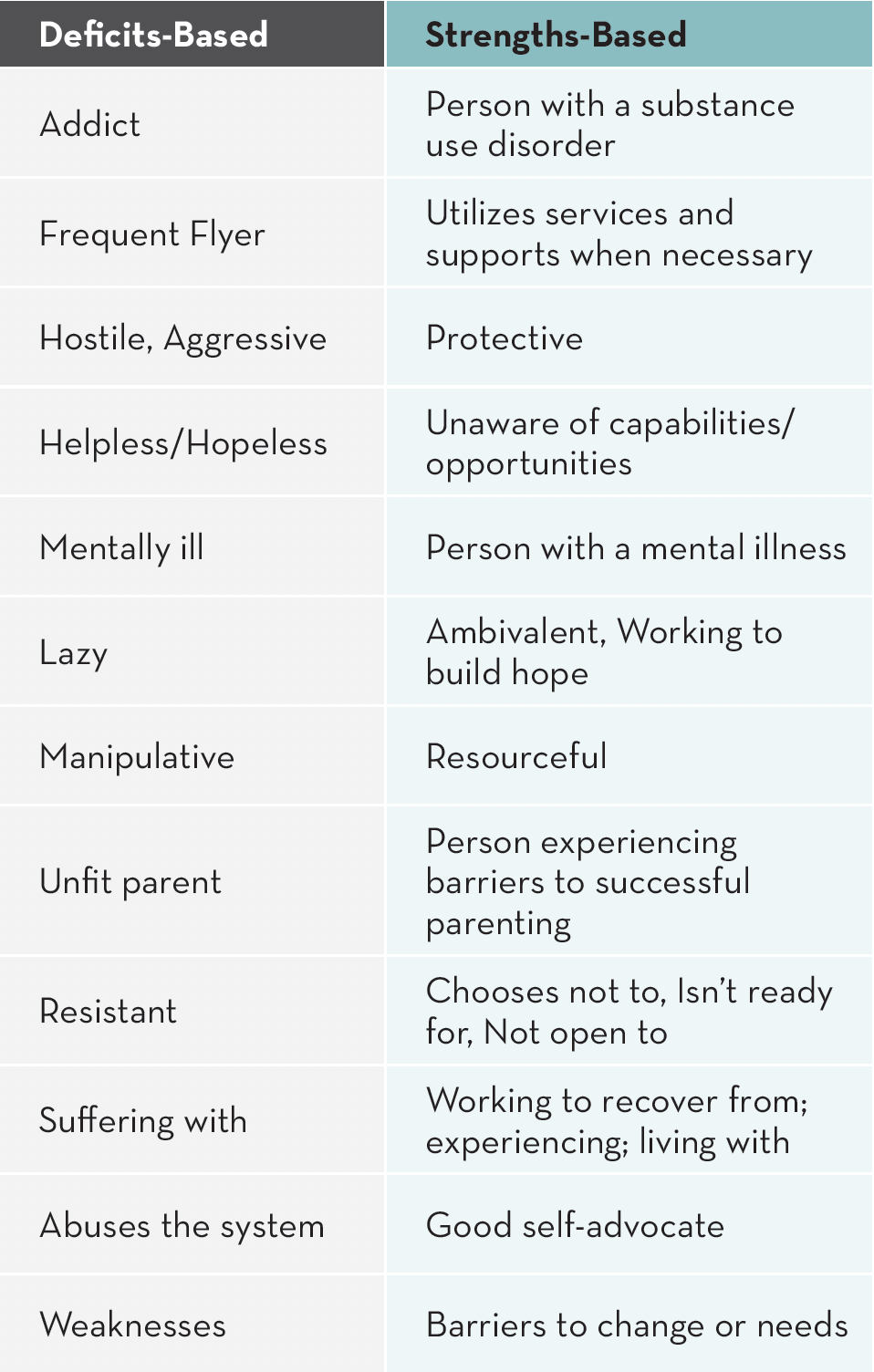
Person Centered Language Center For Practice Transformation


Comments
Post a Comment